1890 — 1970
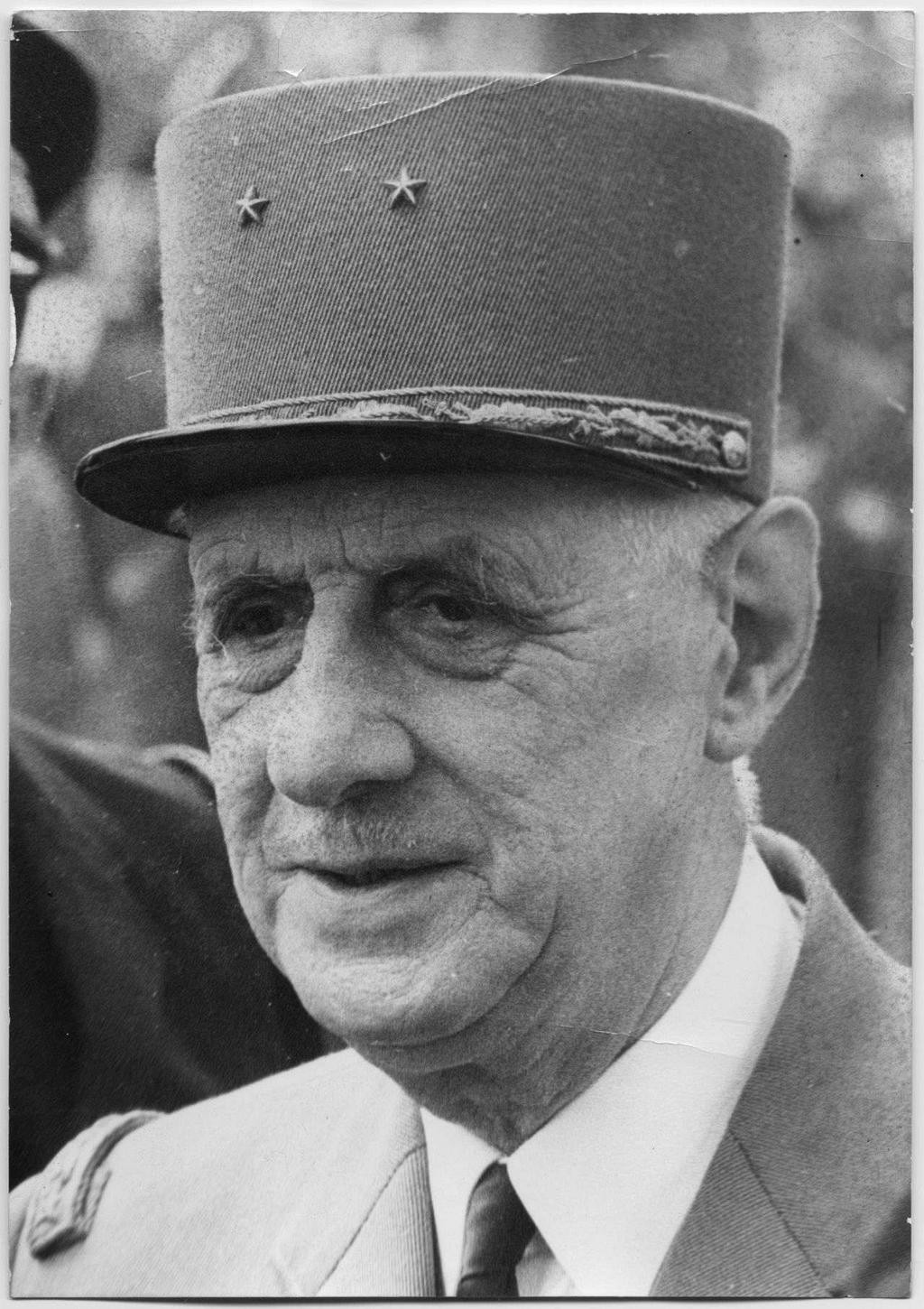
Charles de Gaulle
Le Fondateur de la France Libre
Soldat, Homme d'État, Architecte de la Cinquième République
Scroll
Le Fondateur de la France Libre
Soldat, Homme d'État, Architecte de la Cinquième République
Charles de Gaulle was born on 22 November 1890 in Lille, in the Nord department of northern France. A career soldier shaped by the catastrophe of the First World War, he rose through the ranks to become France's most consequential military and political leader of the twentieth century.
When Nazi Germany overwhelmed France in June 1940, de Gaulle refused capitulation. From London, he broadcast the historic Appel du 18 Juin — a defiant call to arms that became the founding act of the France Libre movement. Against enormous odds, he rallied the Free French Forces, forged alliances with Churchill and Roosevelt, and kept the flame of French sovereignty burning throughout the darkest years of occupation.
The Liberation of Paris in August 1944 marked his triumphant return to France — a moment of national catharsis witnessed by millions. He led the provisional government, then withdrew from politics, only to be called back in 1958 amid the crisis of Algeria and the collapse of the Fourth Republic. He founded the Cinquième République — the Fifth Republic — whose institutions continue to govern France today. He died on 9 November 1970 at Colombey-les-Deux-Églises, leaving an indelible mark on France and the world.
Charles André Joseph Marie de Gaulle is born in Lille to Henri de Gaulle, a professor, and Jeanne Maillot. His upbringing instills deep Catholic faith, patriotism, and reverence for French history — values that will define his entire life.
Graduates from the prestigious Saint-Cyr military academy in 1912. Serves under Colonel Pétain in the 33rd Infantry Regiment. Wounded and captured at the Battle of Verdun in 1916; makes five unsuccessful escape attempts before the Armistice. The Great War forges his iron resolve and strategic vision.
Publishes Vers l'Armée de Métier (Toward a Professional Army), advocating for mechanized, armored warfare. His prescient doctrine is ignored by French high command but studied by German generals — including Rommel and Guderian — who will use it against France six years later.
France falls to Nazi Germany. Refusing to accept armistice, Brigadier General de Gaulle flees to London. On 18 June, he broadcasts on the BBC the historic Appel du 18 Juin — France's founding act of resistance: "Whatever happens, the flame of French resistance must not and shall not die." He establishes the France Libre movement and the Free French Forces.
From London and later Algiers, de Gaulle leads the Free French Forces — rallying French colonies, coordinating with the Resistance inside France, and insisting on France's place at the Allied table. Despite constant friction with Churchill and Roosevelt, he ensures France is treated as a sovereign power, not a liberated protectorate.
Allied and Free French forces liberate Paris from four years of Nazi occupation. De Gaulle marches triumphantly down the Champs-Élysées past the Arc de Triomphe before a crowd of two million. He delivers a speech at the Hôtel de Ville declaring Paris "liberated by itself, liberated by its people." France's honour is restored.
Disillusioned with the Fourth Republic's fractious party politics, de Gaulle founds the RPF — Rassemblement du Peuple Français. The movement advocates for a strong executive presidency and national unity above partisan interests. Though the RPF wins significant support, de Gaulle withdraws from active politics in 1953, retreating to Colombey-les-Deux-Églises to write his memoirs.
The Algeria crisis brings France to the brink of civil war. Called back to power as Prime Minister, de Gaulle negotiates a new constitutional framework — the Fifth Republic — establishing a powerful presidency. He becomes the first President of the Cinquième République on 8 January 1959, operating from the Élysée Palace for a decade of visionary leadership.
De Gaulle navigates the painful end of the Algeria war, granting independence in 1962 after the Évian Accords. He pursues an independent French foreign policy throughout the Cold War — withdrawing France from NATO's integrated military command, developing an independent nuclear deterrent, and forging the Franco-German friendship that underpins European unity. A towering presence on the world stage from the Élysée Palace.
Charles de Gaulle dies suddenly at his home in Colombey-les-Deux-Églises, aged 79, while playing cards. He had requested a simple private funeral with no state ceremony. The world mourns: heads of state from across the globe gather to pay tribute. French President Georges Pompidou announces: "General de Gaulle is dead. France is a widow."
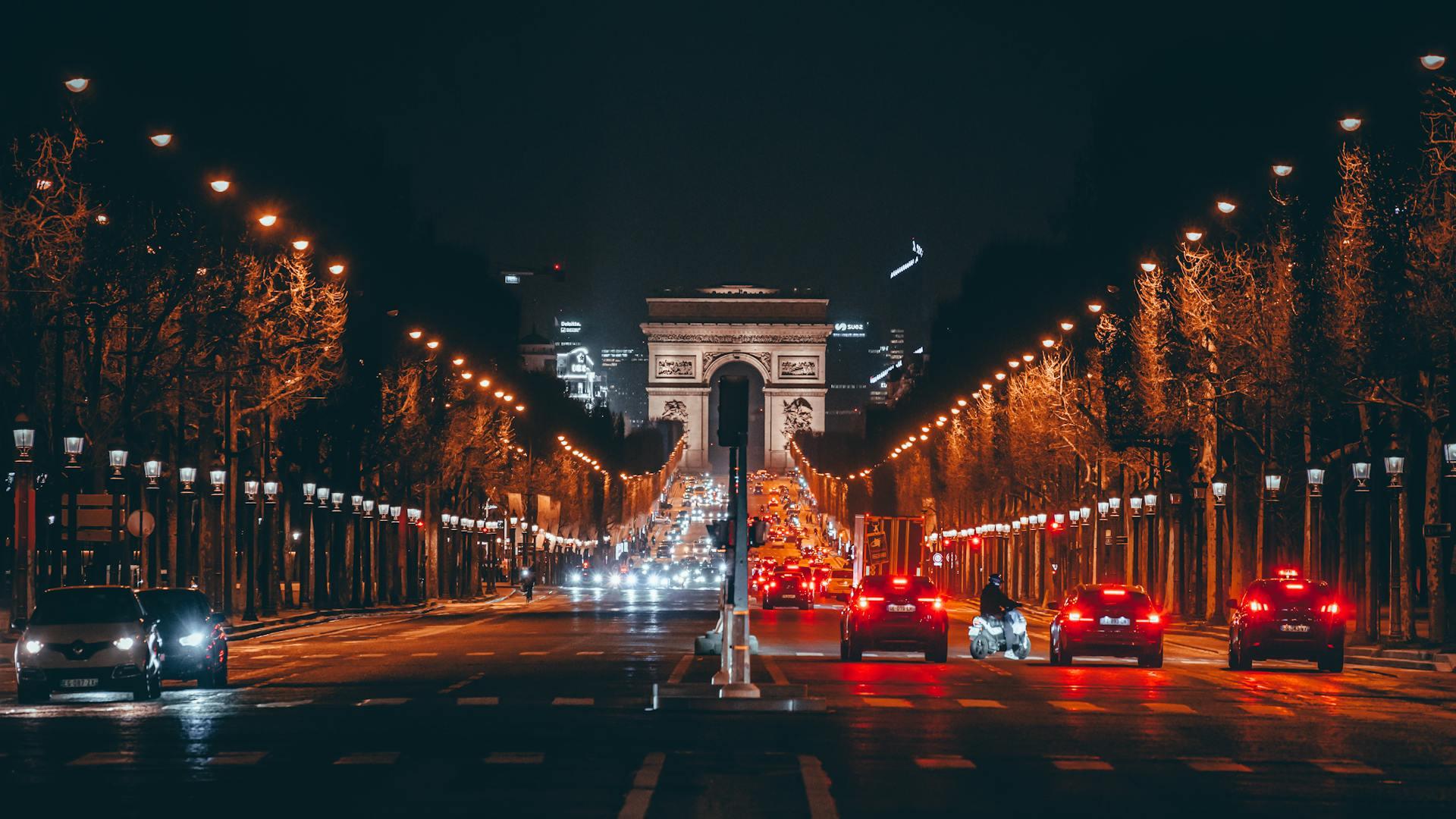
The grandeur of Paris — the avenue where de Gaulle led the Liberation parade on 26 August 1944, restoring French dignity before two million Parisians. The Arc de Triomphe stands eternal guard over France's history.
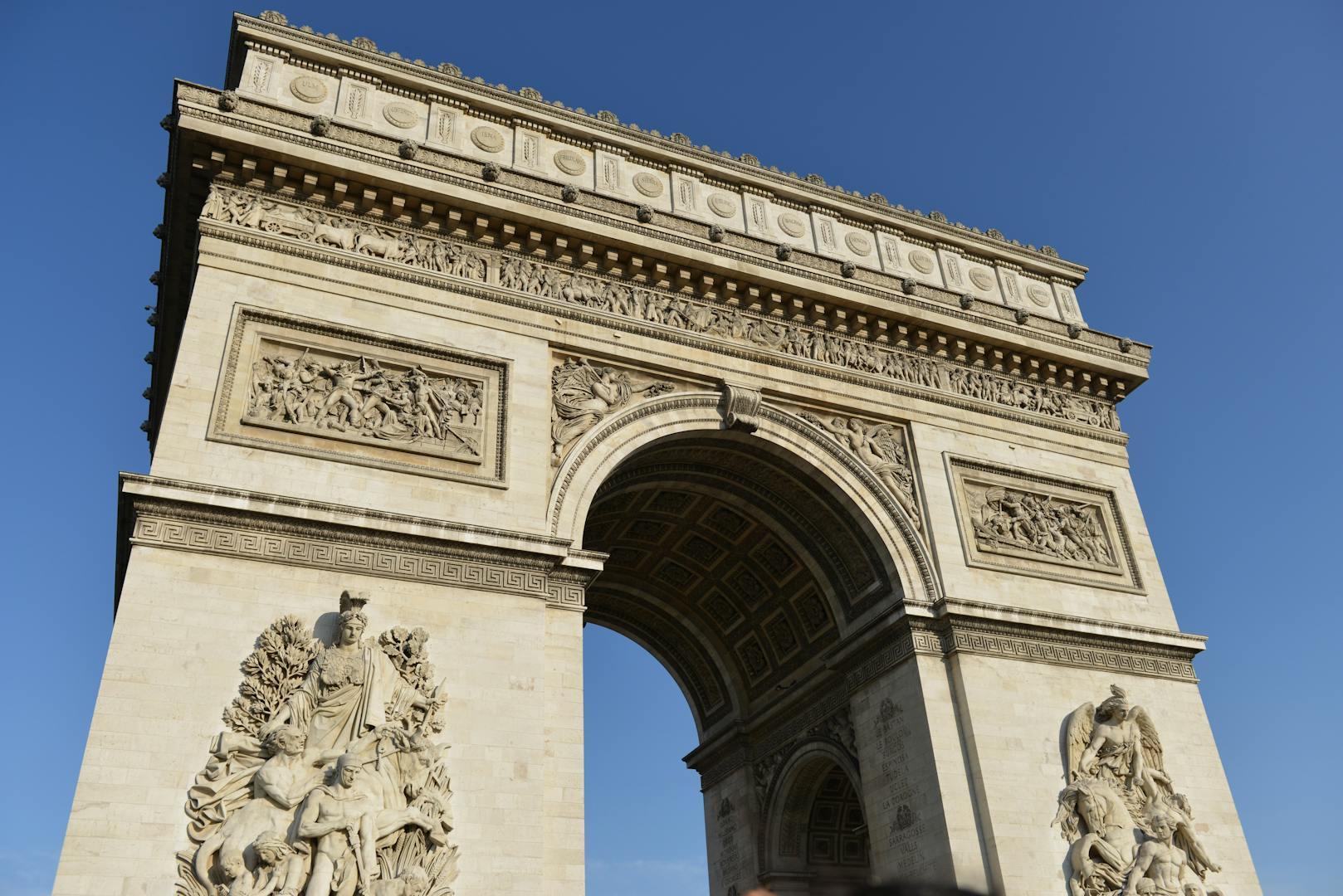
Commissioned by Napoleon and completed in 1836, the Arc de Triomphe honours those who fought for France. The square at its base is formally named Place Charles de Gaulle in tribute to the General.
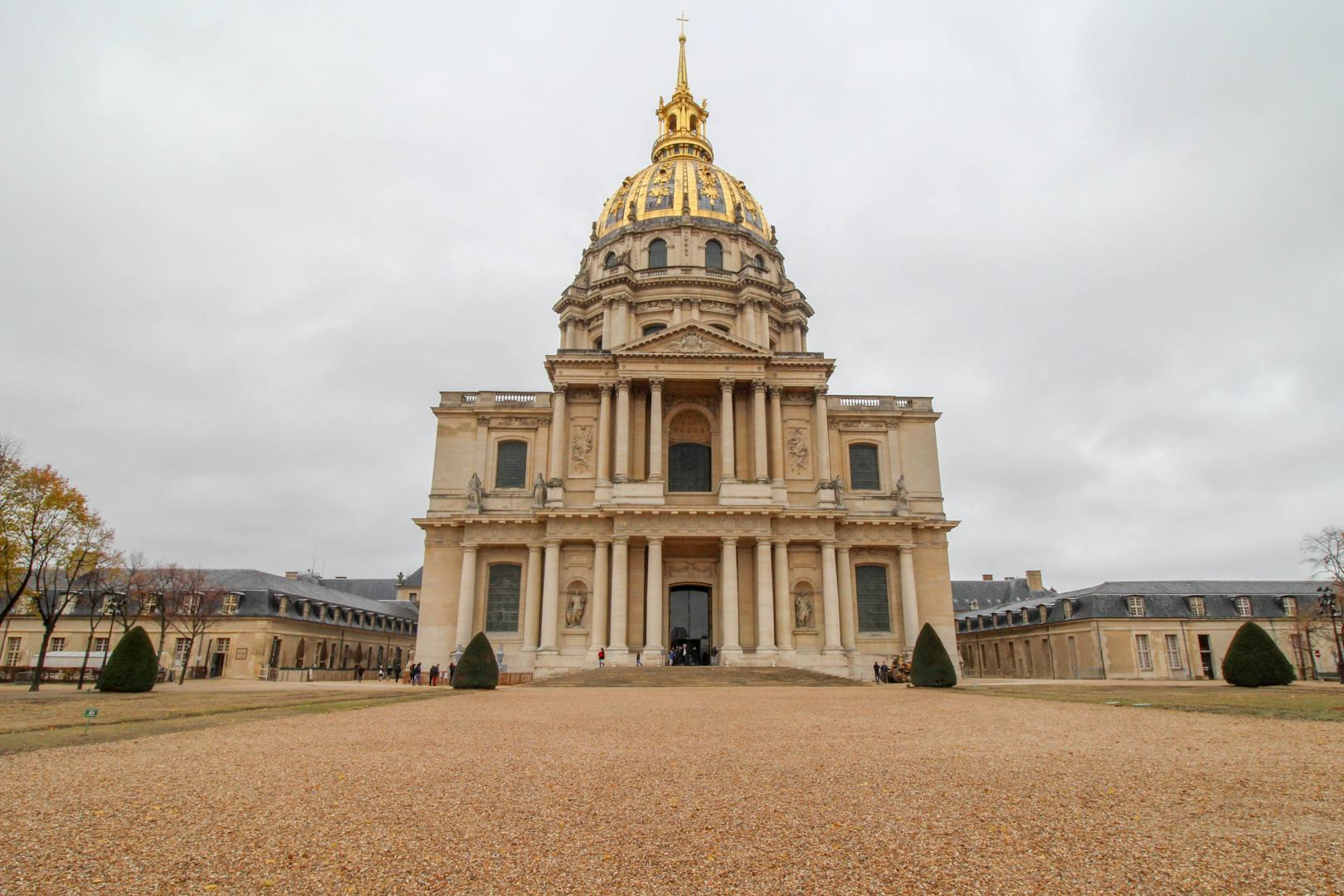
Les Invalides, built by Louis XIV, houses the Musée de l'Armée and the tomb of Napoleon Bonaparte. A site of national remembrance that embodies the martial tradition de Gaulle held sacred throughout his life.
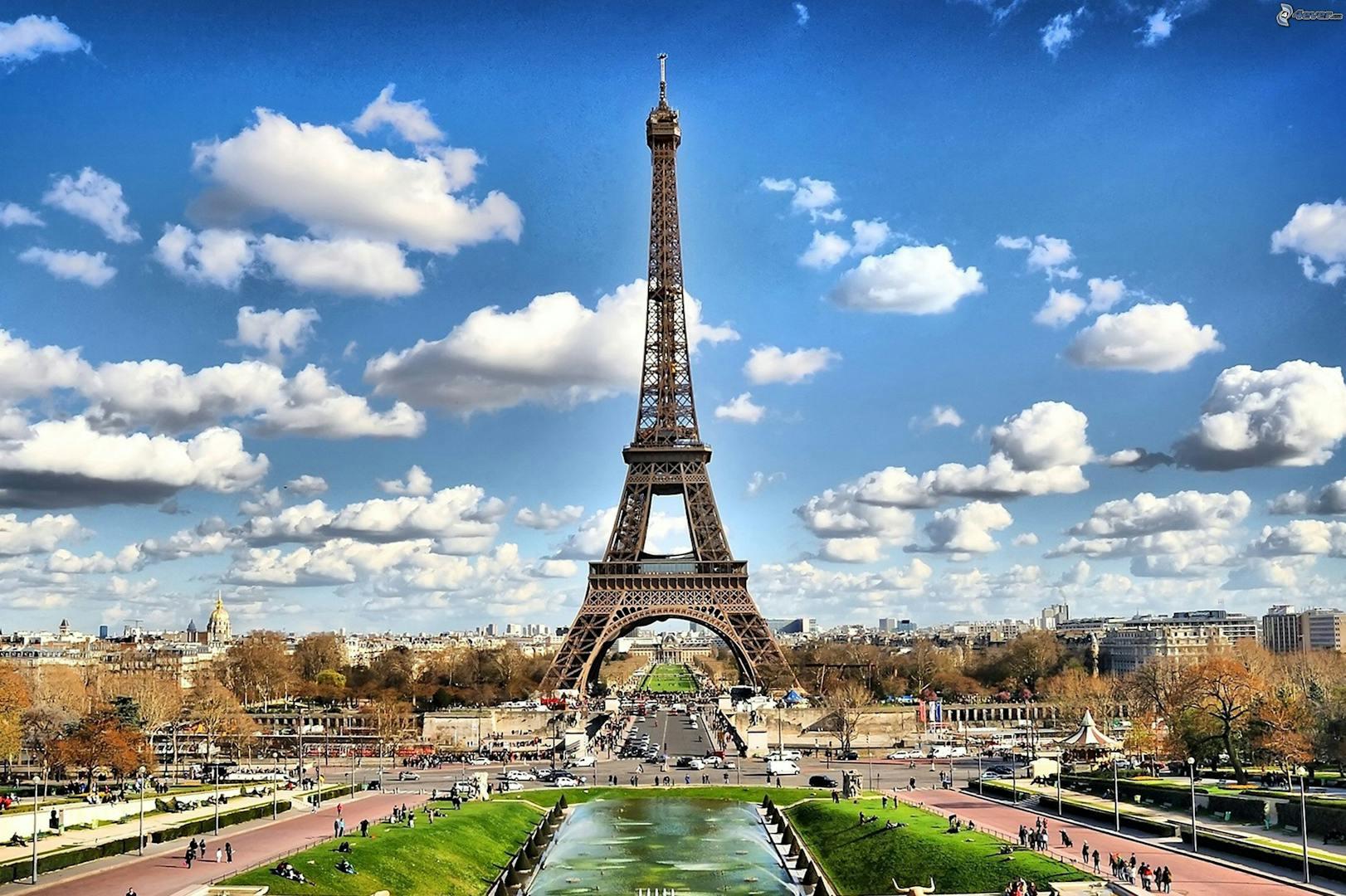
The city de Gaulle fought to free. During four years of Nazi occupation (1940–1944), Paris endured — and on the day of liberation, its people poured into the streets to welcome their General. "Paris! Paris outragé! Paris brisé! Paris martyrisé! Mais Paris libéré!"
La France ne peut être la France sans la grandeur.
Quoi qu'il arrive, la flamme de la résistance française ne doit pas s'éteindre et ne s'éteindra pas.
J'ai toujours pensé que la Providence m'avait créé pour des succès définitifs et achevés.
La politique est trop sérieuse pour être confiée aux hommes politiques.
Le courage, c'est de chercher la vérité et de la dire ; c'est de ne pas subir la loi du mensonge triomphant.
Un grand pays n'a pas d'amis, il n'a que des intérêts.
De Gaulle's most durable creation: the Cinquième République, established in 1958 with a strong presidential system, remains France's governing framework today. Its constitution — shaped by his vision of executive authority and national unity — has endured for over six decades, outlasting all previous French republics.
By founding France Libre in 1940, de Gaulle preserved French sovereignty at its moment of greatest peril. His leadership ensured that France emerged from World War II as a victorious Allied nation — securing a permanent seat on the UN Security Council and restoring national dignity after the humiliation of occupation and armistice.
During the Cold War, de Gaulle charted an independent course for France — withdrawing from NATO's integrated military command in 1966, developing an autonomous nuclear deterrent, and pursuing diplomatic recognition of China. His doctrine of grandeur defined French foreign policy for generations and established France as a power capable of acting independently of both superpowers.
De Gaulle's historic reconciliation with West Germany — most notably through his 1963 friendship with Chancellor Adenauer and the Élysée Treaty — laid the Franco-German foundation upon which the European project was built. His vision of a "Europe of nations" continues to animate debate about European identity and sovereignty to the present day.
The resolution of the Algeria crisis was de Gaulle's most agonising and perhaps most consequential decision. Granting Algerian independence through the Évian Accords of 1962 — at the cost of nearly losing his own life to assassination attempts — demonstrated the pragmatic statesmanship beneath his nationalist rhetoric. He understood that France's future lay in modernisation, not empire.
From Paris's principal airport bearing his name to the Place Charles de Gaulle surrounding the Arc de Triomphe, France commemorates her greatest modern statesman everywhere. His Mémoires de Guerre rank among the masterpieces of French literature. He endures not merely as a political figure, but as the embodiment of France itself — its grandeur, its independence, its will to endure.